

Small business advocacy
A stronger voice for the businesses that move America forward.
Small businesses create jobs, strengthen communities, introduce new ideas and create pathways to economic opportunity. But the decisions that affect their future are often made far beyond the places where entrepreneurs are running their businesses every day.
HISCEC is expanding its work to help bring the experiences, challenges and priorities of small business owners into research, public-policy discussions and other important conversations shaping the future of American business.
Our approach is practical, nonpartisan and grounded in the realities of entrepreneurship.
We listen. We research. We bring small-business voices to the table. And when an issue matters, we help entrepreneurs be heard.
Why it matters
Small business isn't a small part of the American economy. It's essential to it.
The scale of small business makes its operating environment an economic issue — not simply a business issue.
36.2 million
small businesses operate in the United States.
They employ 62.3 million people — 45.9% of private-sector workers.
Source
SBA Office of Advocacy · Frequently Asked Questions About Small Business 2026
88.9%
of the nation's net employment increase came from small businesses during the March 2023–March 2024 reporting period.
Small businesses contributed a net increase of approximately 1.2 million jobs during that period.
Source
SBA Office of Advocacy · 2025 U.S. Small Business Profile
97.2%
of U.S. exporting firms are small businesses.
That represents approximately 270,014 small-business exporters.
Source
SBA Office of Advocacy
Beyond the numbers
Behind every number is a business making real decisions.
Small businesses are not simply participants in the American economy. They employ millions of people, create jobs, serve communities and connect American products and services to markets around the world.
The HISCEC role
That is where HISCEC's advocacy work begins.
We work to bring the experiences of small-business owners into the conversations that shape their operating environment — using research, direct input and real business experiences to help policymakers and other stakeholders better understand what entrepreneurs are seeing on the ground.
Our objective is not to speak for every small business. It is to make sure more small-business perspectives are heard when decisions affecting their future are being made.
Our approach
Advocacy that starts with listening.
Effective advocacy begins with understanding what business owners are actually experiencing.
HISCEC brings small-business perspectives into its advocacy work through direct engagement, research and collaboration. We identify emerging challenges, examine how economic and policy changes affect entrepreneurs, and translate those insights into information that can contribute to better-informed conversations and greater small-business participation.
Listen
Input
Start with the people running the businesses.
Surveys, roundtables, conversations and direct feedback help us understand the challenges, priorities and opportunities entrepreneurs are seeing on the ground.
Research
Evidence
Turn business experiences into evidence.
We examine recurring themes, emerging trends and barriers affecting small businesses, drawing on business-owner input, credible data and research partners where appropriate.
Inform
Understanding
Bring small-business perspectives into important conversations.
We use research and business insights to help policymakers, institutions, corporate partners and other stakeholders better understand how decisions and economic conditions can affect entrepreneurs.
Mobilize
Participation
Create pathways for business owners to participate.
When an issue calls for broader engagement, HISCEC can connect entrepreneurs with opportunities to participate through surveys, research, roundtables, public comments and other appropriate advocacy initiatives.
Our principle
Our role is not to speak over small-business owners. It is to create more opportunities for their experiences, priorities and perspectives to be heard.
The small business economy
The pressures are real. So are the opportunities.
Small businesses operate at the intersection of forces that rarely move independently. Costs, access to customers, trade, technology, capital, energy, healthcare and workforce conditions can reinforce one another — shaping whether a business can invest, hire and grow.
- Costs
- affect margins and investment.
- Customers
- determine growth.
- Capital
- enables expansion.
- Trade
- shapes costs and market access.
- Workforce
- affects capacity.
- Technology
- increasingly influences productivity and competitiveness.
77%
of surveyed employer firms experienced challenges associated with rising costs.
Rising costs of goods, services and/or wages affected 73% of firms, while 42% reported increased costs associated with tariffs. Overall, 77% reported one or both challenges.
Source
Federal Reserve Banks · 2026 Small Business Credit Survey — Report on Employer Firms
57%
reported reaching customers and growing sales as an operational challenge.
It was the most commonly reported operational challenge among surveyed employer firms.
Source
Federal Reserve Banks · 2026 Small Business Credit Survey — Report on Employer Firms
17.1%
of U.S. retail sales occurred online in Q2 2026.
Seasonally adjusted U.S. retail e-commerce sales reached an estimated $340.2 billion USD during the quarter, up 12.2% from Q2 2025.
Source
U.S. Census Bureau · Quarterly Retail E-Commerce Sales — Q2 2026
Less than 20%
of businesses with four or fewer employees reported using AI.
Census data show a clear adoption gap by firm size, while overall business AI use hovered between 17% and 20% from December 2025 through May 2026.
Source
U.S. Census Bureau · Business Trends and Outlook Survey — May 2026
Understanding those connections is essential to understanding the small-business economy — and to developing policies that reflect how entrepreneurs actually operate.
Our policy platform
Eight priorities. One objective: a stronger environment for small business.
HISCEC's policy platform focuses on the economic, financial, technological and workforce conditions that influence whether small businesses can start, compete, invest, hire and grow.
Our priorities are informed by the experiences of entrepreneurs, credible research and the changing realities of doing business.
01Business costsSmall-Business Affordability & Cost CompetitivenessHelp create an operating environment where entrepreneurs can manage rising costs, invest in their businesses and remain competitive.
Issues we follow
02Market accessFair Trade & Market AccessSupport trade policies that help small businesses compete, manage costs and reach customers across domestic and international markets.
48%
97.2%
Issues we follow
03Tax & investmentTax Policy & Incentives for Small-Business GrowthAdvance a tax environment that supports investment, innovation, hiring and long-term business growth.
Issues we follow
04EnergyAffordable & Reliable EnergySupport energy policies that recognize the impact of affordability and reliability on small-business operations, investment and competitiveness.
Issues we follow
05Production & jobsAmerican Production, Innovation & Job CreationStrengthen the conditions that help small businesses produce, innovate, invest and create jobs in the United States.
Issues we follow
06Capital & opportunityAccess to Capital, Financial Capability & Economic OpportunityExpand pathways to capital, financial knowledge and opportunity so more entrepreneurs can start, strengthen and grow sustainable businesses.
Access to money and access to financial knowledge must advance together.
Issues we follow
07WorkforceHealthcare, Workforce & TalentSupport conditions that help small businesses attract and retain talent while navigating the cost and availability of healthcare and workforce resources.
$26,993 USD
Issues we follow
08Digital economyDigital Economy, E-Commerce & Artificial IntelligenceHelp ensure small businesses can adopt emerging technologies, compete online and participate in shaping the policies that will define the next economy.
Issues we follow
Small business research
Better policy starts with better information.
Too often, decisions affecting small businesses are informed by broad economic data without enough visibility into what entrepreneurs are experiencing on the ground.
HISCEC is working to help close that gap.
Through surveys, research collaborations, business roundtables and economic analysis, we gather and examine small-business perspectives on the issues shaping their ability to compete and grow — from costs and access to capital to trade, workforce challenges and technology adoption.
The goal is simple: turn real business experiences into useful insights that can contribute to better-informed decisions.
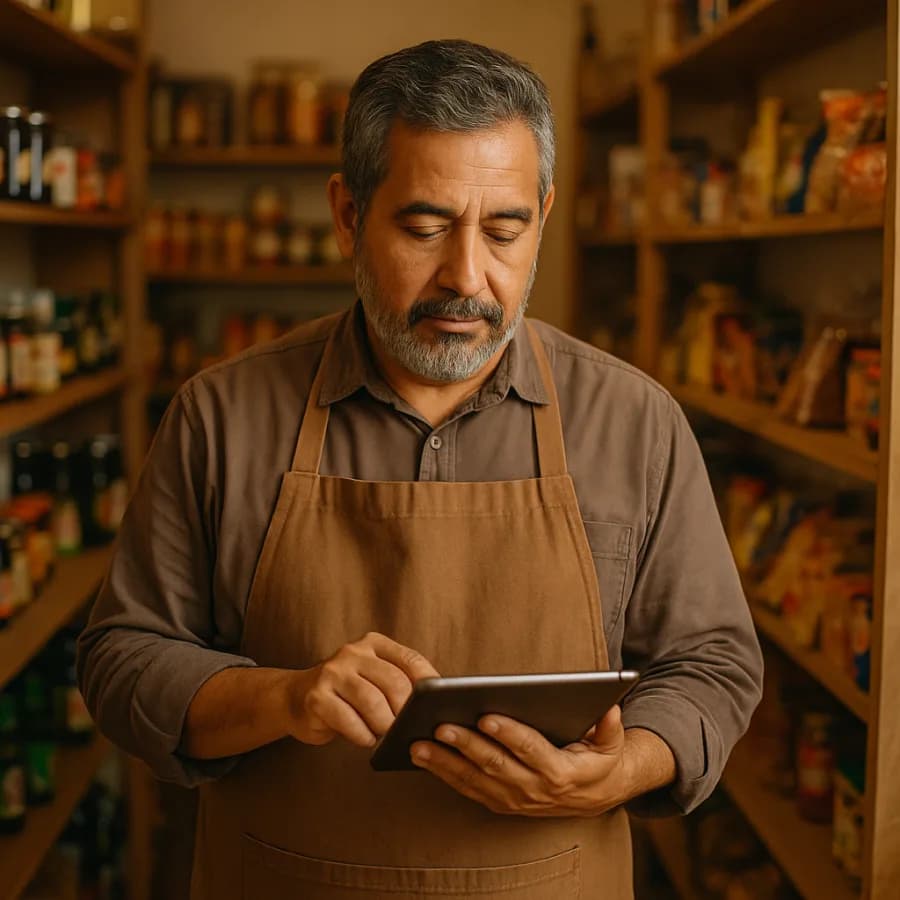
Research starts with the entrepreneur
Small business pulse
Timely surveys designed to capture what entrepreneurs are experiencing, what is changing and where new challenges are emerging.
Research & insights
Deeper analysis of economic, financial, technological and policy issues affecting small-business competitiveness and growth.
Entrepreneur voices
Firsthand perspectives that bring the realities behind the data into research and policy conversations.
From experience to evidence
Your experience is data.
Policy and economic change becomes real at the business level.
Business experienceEvidence
Three more hours of paperwork
can mean three fewer hours serving customers.
A higher healthcare premium
can influence whether a business is ready to make its next hire.
A change in tariffs or input costs
can reshape pricing and margins.
Capital that is difficult to access
can delay an expansion, equipment purchase or new opportunity.
An AI tool that saves time
can give a small team greater capacity to compete.
A customer reached through e-commerce
can open a market that did not exist for that business before.
When experiences repeat
One experience is a story. Thousands of experiences can reveal a pattern.
- Experience
- Pattern
- Evidence
- Better-informed decisions
When entrepreneurs share what they are seeing, those experiences can help identify emerging challenges, uncover opportunities and add context to economic data.
That is how business experience becomes evidence — and evidence can contribute to better-informed decisions.
Participate
You don't have to be a policy expert to make a difference.
You know your business. You know what's making it harder to grow — and where new opportunities are emerging. That perspective matters.
Participating in HISCEC's advocacy work can be as simple as answering a short survey, sharing how a proposed change could affect your business, joining a roundtable or telling us what you're experiencing in your market.
You choose the issues that matter to you and how you want to participate.
Bring the experience. We'll help bring it into the conversation.
Open to all small businessesYou do not need to be a HISCEC member to participate.
Add Your Voice to the Small-Business Advocacy Network
Tell us what matters to your business and how you'd like to participate. Joining is free, and you do not need to be a HISCEC member.
You may be invited to:
- Answer short surveys and polls
- Participate in research or interviews
- Join business roundtables and listening sessions
- Share how economic or policy changes affect your business
- Contribute to support letters or public comments when appropriate
- Share your small-business story
Our commitment
Small business first. Evidence driven. Nonpartisan.
HISCEC's advocacy work focuses on the economic environment affecting small businesses and entrepreneurs.
We seek perspectives from business owners, researchers, community organizations, industry leaders and other stakeholders. Our approach is grounded in evidence, constructive dialogue and the real-world experiences of entrepreneurs.
Our objective is simple: help create an environment where more small businesses can start, compete, grow and succeed.